Our top pick1,211 reviews
12 hFrom Tromso: Whale Watching in Magic Skjervoy
★ 4.7 · 1,211 reviews
- Twelve hours, the full day north to Skjervøy
- Transfer from Tromsø included
- Longest tour here
- Free cancellation
$361$30.08 / hour
Check availability→ What to wear
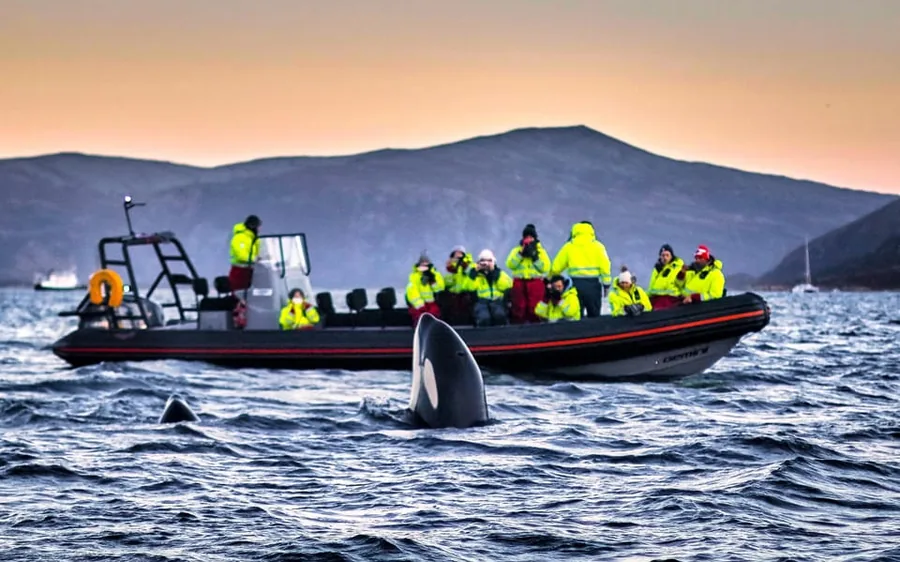
What to wear whale watching in Tromso comes down to one decision the listing makes for you: the open boats lend you a full thermal flotation suit, and the big boats give you a heated saloon instead. Everything else is layers underneath, a hat that fits under a hood, and gloves you can work a camera in. Trips run from $211, and our top pick at $361 includes the suit for the twelve-hour day north.
Quick answer
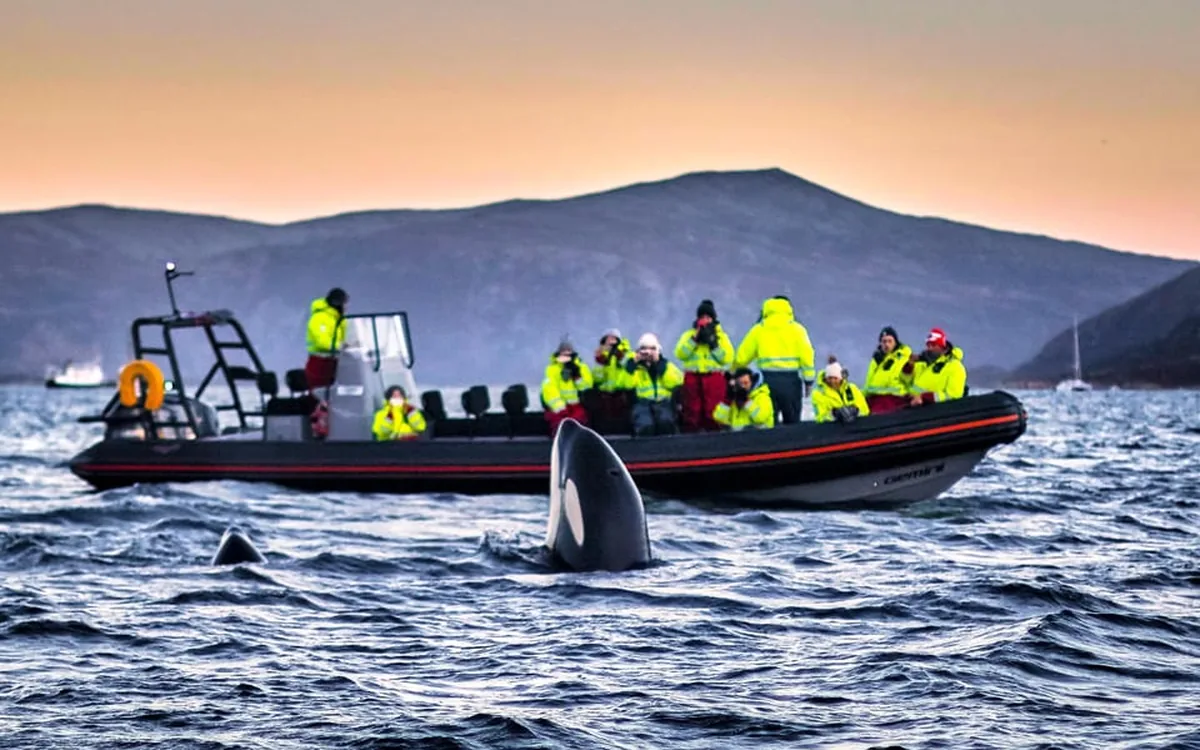
On every RIB here the operator lends a full thermal flotation suit, boots, gloves and goggles, worn over your own clothes. On the catamarans and the larger boats the warmth comes from a heated saloon you can step into whenever you like, so you dress as you would for a cold day ashore and add one more layer than feels necessary. Wool next to the skin, a thin hat under the hood, two pairs of gloves, and boots with room for thick socks. On a whale watching Tromso day the air temperatures sit between −5 and +2 °C; the wind over open water does the rest.
The one decision that matters
Read which boat it is, then dress for that boat.
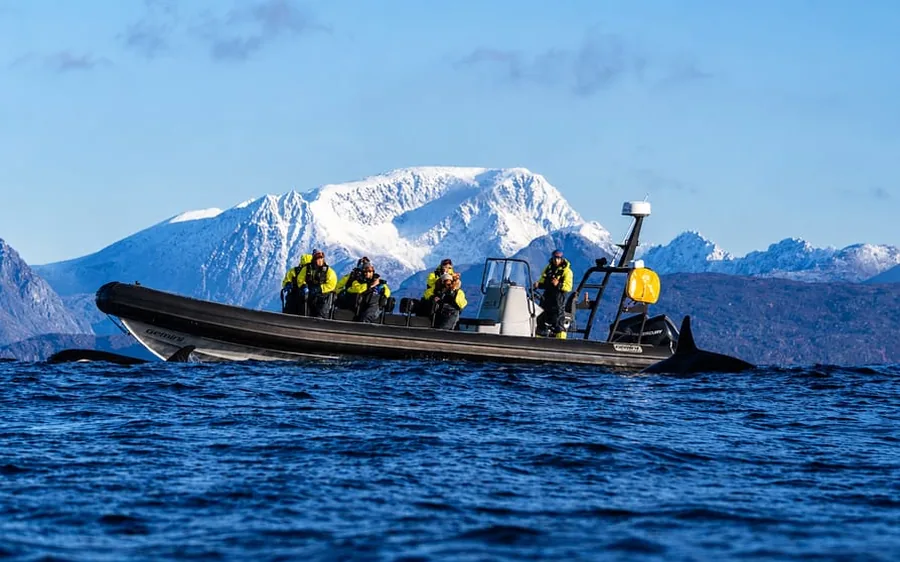
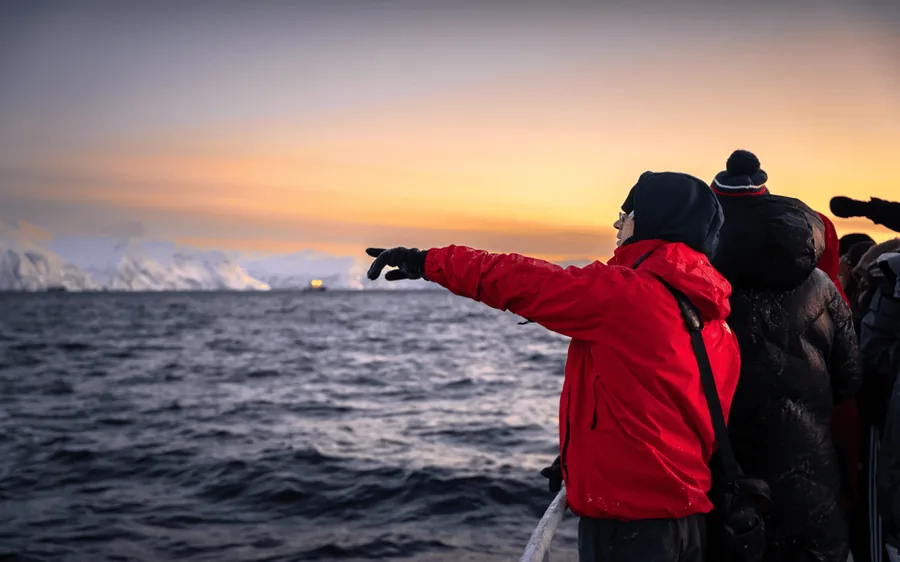
On a RIB you wear the operator’s suit. It is a full-body thermal flotation suit: you step into it over your own clothes at the base, zip it to the chin, pull up the hood, and add the boots and gloves they hand you. It is bulky, it is warm, and it floats. Inside it your own clothing does one job only, which is to insulate; the suit handles wind and spray entirely. Listings at $340, $244 and $260 all work this way.
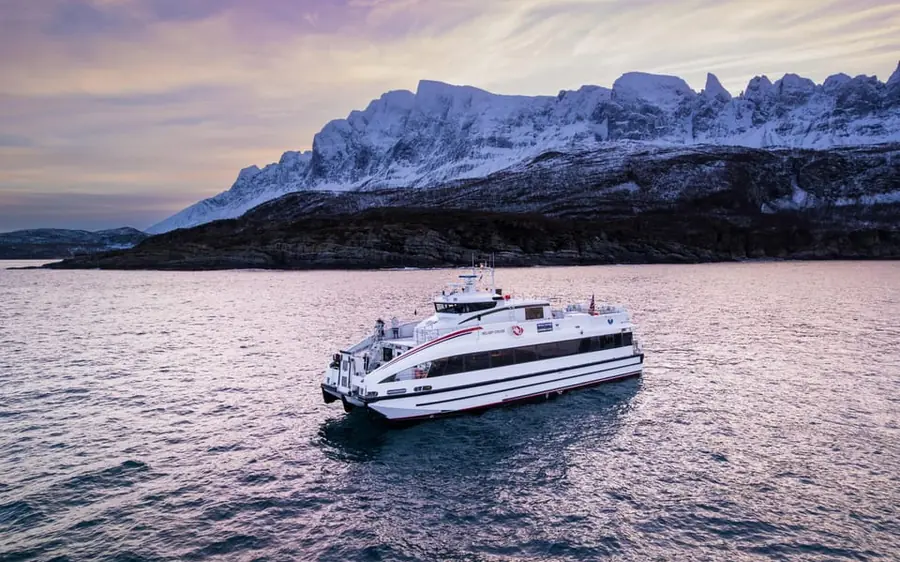
On a catamaran or a larger boat you wear your own clothes and step inside when you want to. $223 and $211 run heated indoor seating with open decks outside it; $212 has a heated saloon; $218 has indoor lounges and outdoor decks; $266 includes suits as part of its all-inclusive fare. Here your layers do all the work while you are on deck, which is where you will want to be whenever a blow goes up.
Our top pick, the full day north at $361, includes the transfer from Tromsø and the suit for the boat, so the only decision left is what goes underneath.
The layers
Wool, fleece, shell — and mind the gaps.
Base: merino wool, top and bottom. Cotton holds moisture against the skin and turns cold the moment you stop moving, which on a twelve-hour day happens often. Merino keeps insulating while damp and it handles a full day of wear well. Thermal leggings under normal trousers are the single most effective thing most visitors add.
Mid: fleece or light down. This is the adjustable layer. In a heated saloon it comes off; back on deck it goes on. A hooded fleece is more useful than a hoodless one because the hood fills the gap between hat and collar when the boat is at speed.
Outer: a proper winter jacket with a hood, plus windproof trousers. On the big boats this is your shield. Waterproof matters more than it sounds: the deck picks up spray, and snow on a moving boat arrives horizontally. On a RIB the operator’s suit replaces this layer entirely, so pack for the walk to the quay instead.
The failure people describe afterwards is almost always the same, and it is rarely the coat. It is thin socks in tight boots, bare wrists between glove and sleeve, or a hat that covers the head while leaving the ears out. Those three gaps cost more comfort on a whale watching Tromso day than any jacket gains.
Book direct
The full day north with a suit, a RIB day in suits, a catamaran with a warm cabin, and an all-inclusive boat that includes the suits in the fare.
★ 4.7 · 1,211 reviews
★ 4.8 · 1,281 reviews
★ 4.7 · 662 reviews
★ 4.6 · 1,722 reviews
Four things people wish they had brought
The suit and the saloon are handled. These four are yours to pack.
Thick mittens keep hands warm and make a phone or a camera dial impossible. A merino or silk liner underneath lets you take the mitten off for thirty seconds at a time.
It seals the gap a scarf leaves open, pulls up over the nose when the boat is at speed, and weighs nothing in a pocket.
Deck spray finds boots. Dry socks for the drive home turn the last hour of a twelve-hour day into a pleasant one.
Cold flattens phone batteries fast. An inside pocket keeps the phone alive; a small power bank in the same pocket keeps it alive for the whole trip.
Cameras and phones
Batteries inside, camera outside, and a wrist strap on a RIB.
Two things happen in Arctic air. Batteries lose capacity quickly, and warm glass fogs when you carry it from a heated saloon into a headwind. Both are easy to manage once you expect them.
Keep spare batteries in an inside pocket against your body and swap them in rather than waiting for a full one to die. Leave the camera in the cold between sightings instead of shuttling it inside and out, which is what causes condensation on the lens. On a RIB, a wrist strap is worth more than a neck strap: gloved hands and a moving boat are a combination that rewards being tethered.
And a small point that improves most people’s photographs more than any lens: the light on a whale watching Tromso trip is low and sideways all season. Underexposing slightly keeps the pink in the snow and stops a black dorsal fin turning into a silhouette against bright water. The guides on the silent boats often say the same thing while the engines are off.
Seasickness, handled early
Tablet with breakfast, seat amidships, eyes on the horizon.
The fjords on a whale watching Tromso route are sheltered by islands for much of the way, and many trips stay inside that shelter. Crossings can still roll, and the honest approach is to prepare rather than hope.
Take a tablet with breakfast rather than on the boat: the common remedies work best taken an hour or two before departure, and taking one on a calm day costs nothing. Eat something plain beforehand, because an empty stomach fares worse than a full one. Once aboard, sit in the middle of the boat where the motion is least, keep your eyes on the horizon or on the mountains, and stay on deck in the fresh air if you feel unsettled — the warm saloon is comfortable and the open rail is steadier for your inner ear.
Crews carry bags and are entirely unbothered about handing one over. The larger boats at $223 and $212 have the most stable platforms and real toilets; a RIB is livelier by design and best suited to people who enjoy that.
The full day north to Skjervøy with the transfer and the thermal suit included — 1,211 reviews at 4.7, free cancellation to 24 hours before.
Check dates for our top pick→Common questions
On every RIB here, yes: a full thermal flotation suit with boots, gloves and goggles, worn over your own clothes. The larger boats give you a heated saloon instead, so you bring your own winter layers.
Air temperatures through the season sit between about −5 and +2 °C, with the sea around 4–6 °C. Wind over open water is what you actually dress for.
Merino base layers, a fleece, thick socks, and a thin hat that sits under the hood. Wool rather than cotton, because it keeps working when it is damp.
On the larger boats they are useful, because the deck catches spray. On a RIB the operator’s suit covers everything, so ordinary warm trousers underneath are enough.
The RIBs lend them. On the big boats, bring boots with room for thick wool socks — tight boots are the most common reason people get cold feet.
Yes, and a wrist strap makes it easier with gloves on. Keep spare batteries in an inside pocket and leave the camera in the cold between sightings to keep the lens clear.
On the catamarans and larger boats, a heated saloon with indoor seating. On the RIB days, the suit does that job, and the trips at $282 put a heated cabin on a small boat.
Go deeper
When the whales arrive, when they leave, and which month suits which boat.
VerdictFourteen ranked for one decision, with a straight answer for each kind of visitor.
PricesFourteen fares compared, cost per hour, and what the price includes.
OrcasWhat you actually see, how close the boats get, and why the two species travel together.
SkjervøyTwo hours north of Tromsø, and why half the fleet drives there in midwinter.
RIB or catamaranSpeed, warmth, cameras and seasickness: how the two kinds of boat differ.
From Tromso: Whale Watching in Magic Skjervoy
★ 4.7 · 1,211 reviews · Free cancellation 24 h