Tromsø: Whale Watching Tour by Hybrid-Electric Boat
★ 4.5 · 6,653 reviews
- Nine hours, a hybrid-electric boat that runs quietly
- Guides on deck all day
- Most booked
- Free cancellation
Silent boats
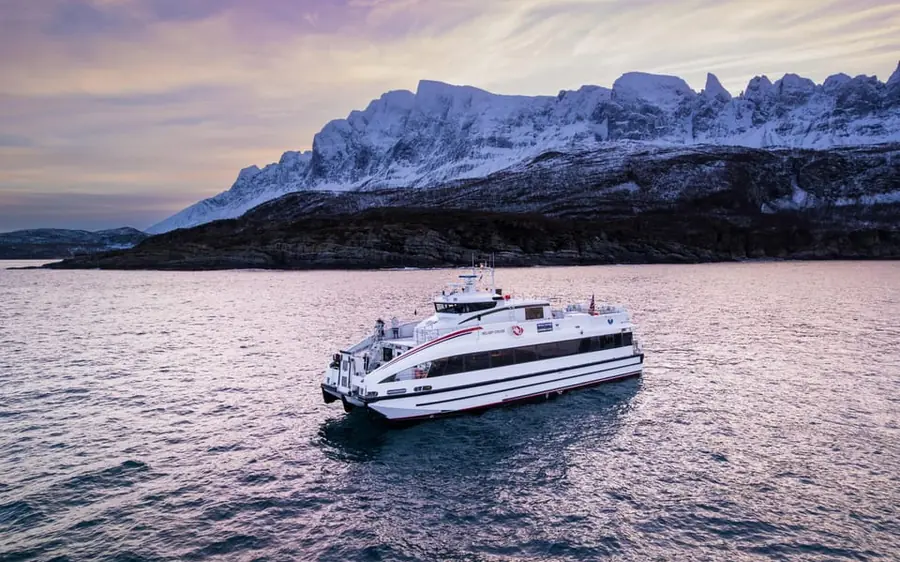
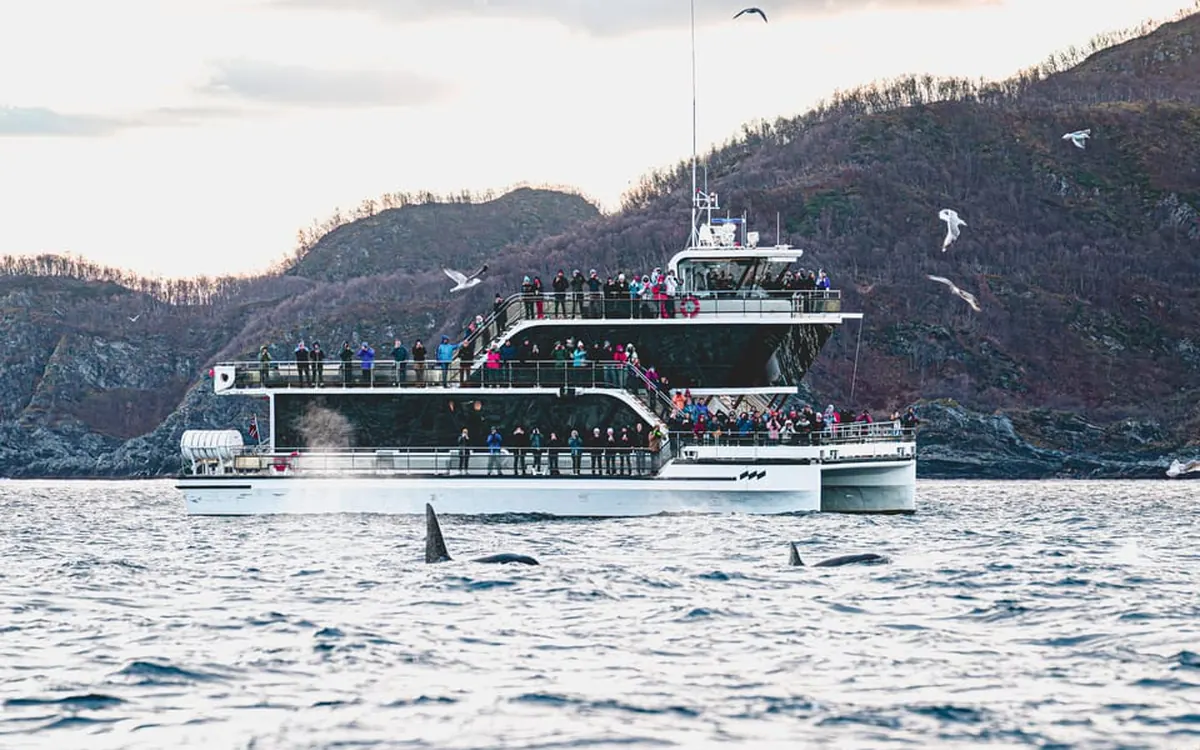
Silent whale watching Tromso trips run on hybrid-electric power, and the idea is simple: cut the diesel as you approach, glide the last stretch on batteries, and let the whales hear the herring instead of you. The hybrid-electric boat at $222 is the most reviewed listing on this site with 6,653 ratings, and the small ship at $218 builds the same restraint into how it works. Our top pick, the full day north at $361, takes a different route to the same idea.

Quick answer
A hybrid-electric boat switches to battery power for the approach, so the last few hundred metres are close to silent. That helps in two directions: underwater noise drops around animals that hunt and talk by sound, and on deck you hear the blows, the gulls and the water. The listings: $222 for nine hours on the hybrid-electric boat with 6,653 reviews, and $218 for eight hours on the small ship MS Alba, rated 4.7. Every other whale watching Tromso boat here works to the same viewing rules, from $211 upwards — the quiet ones simply add an engine that can be turned off.
How a hybrid boat actually works
Cut the noise, and the animals carry on doing what you came to see.
A hybrid-electric passenger vessel carries a normal diesel drive for the run out of Tromsø and a battery bank with electric motors for everything else. The skipper covers the twenty or thirty miles of open fjord under diesel at cruising speed, then, once the gulls and the first blows are in sight, switches over. The engine note falls away and the boat arrives at walking pace under almost no sound at all.
On deck the effect lands immediately. You hear the blow before you see it — a sharp, wet exhalation that carries a surprising distance over still water — and then the herring gulls, and then somebody’s camera. People stop talking. Several thousand of the reviews on $222 describe that moment rather than the animals.
Underwater, the reasoning is stronger. Orcas hunt herring as a coordinated group, calling to each other and reading the shoal by echolocation. A quiet approach keeps a boat out of that conversation. It is the same logic behind the wider Norwegian viewing practice that every operator here follows, and the hybrid boats simply have better hardware for it.
The practical upside for you is the same as the ecological one: whales that are left to feed keep feeding, and a group that keeps feeding stays in one place long enough to watch properly.
Book direct
The hybrid-electric boat, the small ship built around restraint, our top pick, and the lowest fare on the site.
★ 4.5 · 6,653 reviews
★ 4.7 · 53 reviews
★ 4.7 · 1,211 reviews
★ 4.7 · 662 reviews
The small-ship version
Fewer people aboard buys patience, which is its own kind of quiet.
Not every quiet boat is electric. The eight-hour trip on MS Alba at $218 approaches the same problem from the other end: a small vessel, a modest number of guests, and viewing distances that the crew treats as the point rather than the paperwork. Its rating sits at 4.7, from 53 reviews — a young listing with a clear character.
Small ships have a quality that the numbers miss. With fewer people aboard, the boat can hold position for longer without anyone feeling they have missed their turn at the rail, and the guide has time to explain what a group of orcas is actually doing: herding, stunning with tail slaps, taking fish one at a time from the edge of the ball.
If you want that atmosphere with a battery drive as well, $222 is the larger boat with the quiet approach and the deepest evidence base on this site. If you want the whole day pointed at the fjords where the herring winter, our top pick at $361 does that instead, and the twelve hours include the coach.
What the quiet buys you
None of them changes where the whales are. All of them change the half-hour you spend beside them.
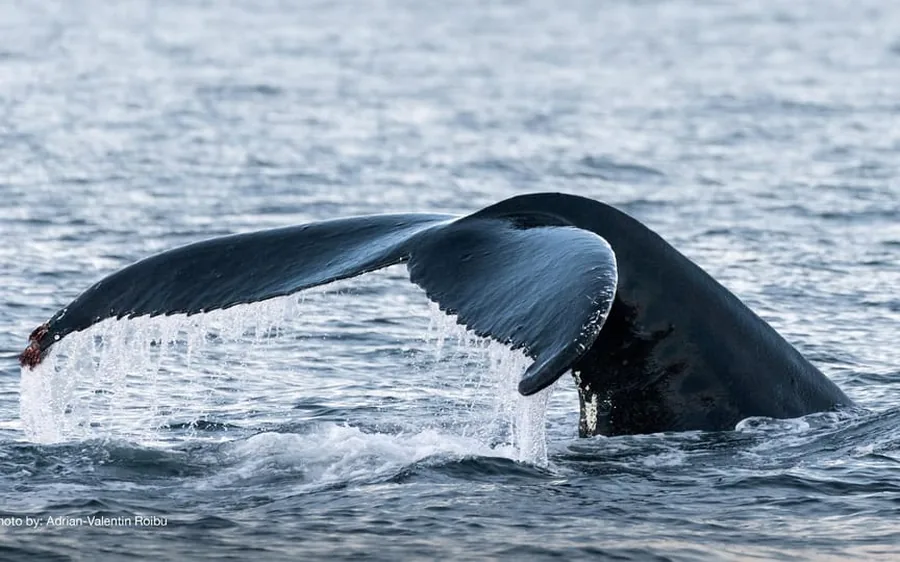
A humpback exhaling fifty metres away is a loud, startling sound, and on a silent approach it reaches you across open water before anyone points.
Feeding groups that are left undisturbed keep working the shoal, which gives you a longer and calmer encounter than a brief pass.
People lower their voices on a silent boat without being asked. Guides use it: the commentary turns into a whisper and a pointed finger.
Phone footage from a hybrid approach has the fjord in it instead of an engine, which is the detail people notice when they watch it back at home.
What a quiet approach shows you
The feeding is the show, and quiet boats get to watch more of it.
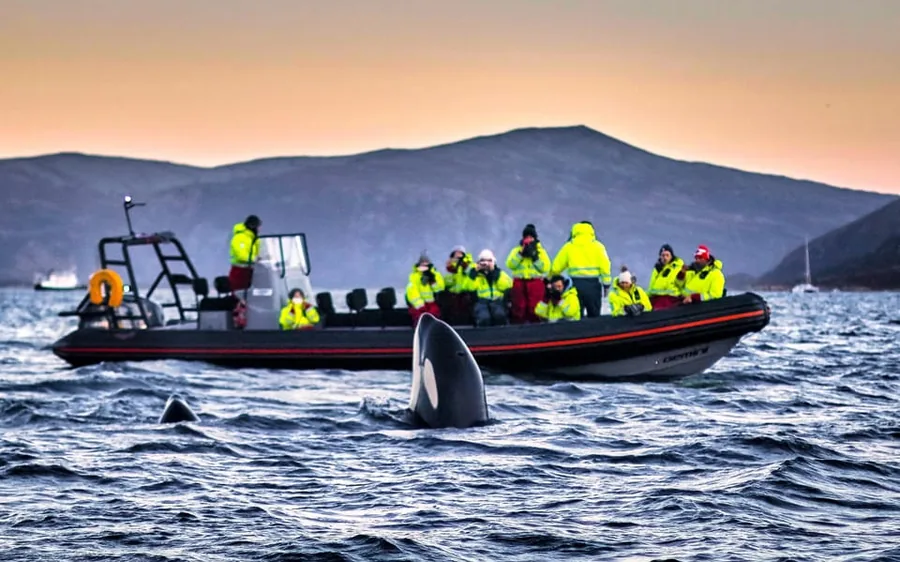
A herring ball under attack is one of the busier scenes in the North Atlantic, and most of it happens in the top ten metres where you can watch it. Orcas circle the shoal and push it towards the surface, tightening it into a silver column. One animal swims in, slaps the ball with its tail and stuns a few dozen fish, and the group picks them off one at a time. Humpbacks arrive underneath and come up through the whole column with their mouths open, which is the lunge that fills the postcards.
All of that takes patience to see, and patience is what a silent boat buys. On the hybrid-electric day at $222 the skipper can hold a position at the edge of the action under battery power for as long as the animals stay interested, and guests report watching a single feeding event for half an hour or more.
You also start to hear the structure of it. Blows come in bursts as a group surfaces together; gulls scream when the fish are pushed up; and when a humpback breaks the surface close by, the sound arrives a beat before the splash. People who have done both describe this as the difference between watching whales and being among them.
The same behaviour happens in front of every boat on this page. What the quiet ones change is how long the scene lasts and how much of it reaches your ears rather than being covered by an engine.
Who the quiet boats suit
They cost about the same as their noisier neighbours, so this is a preference rather than a budget decision.
A battery approach leaves the fjord audible in your footage: blows, gulls and water instead of a diesel note under everything.
Longer holds at the edge of a feeding group mean more behaviour and fewer repositions.
A hull that can switch its engine off is the clearest answer a boat can give, and the crews on $222 and $218 explain how they work.
A boat drifting under electric power vibrates less than one holding station on a diesel, which shows up in long lenses at slow shutter speeds.
The hybrid-electric boat carries 6,653 reviews, the most of any listing on this site, and nine hours to use them in.
See the full ranking→Viewing rules, plainly
Distance and patience, which turn out to be the same thing as a good sighting.
Norwegian whale watching works to a shared code, and it is worth knowing before you book because it explains things that can look like caution from the deck. Boats keep a set distance from animals, approach from the side rather than driving at a group, hold a steady slow speed in the vicinity, leave feeding groups room to work, and give way when whales change course.
When a skipper stops two hundred metres short of a busy shoal and lets the boat drift, that is the code in action. It is also, in practice, the best way to get close: animals that are left alone often approach a drifting boat on their own terms, and the encounters people describe in reviews almost always begin that way.
Every listing here works to it, from $211 to $391. The hybrid and small-ship options at $222 and $218 make it part of their pitch, and the reviews suggest guests notice.
Common questions
A trip on a boat that can switch from diesel to battery power for the approach, so the last stretch is close to silent. The hybrid-electric listing here is $222.
It means calmer ones. Feeding whales that are left undisturbed tend to keep feeding, which gives everyone a longer look.
The run out of Tromsø uses the diesel drive for speed. The quiet part is the approach and the time spent beside the animals.
$222, the hybrid-electric boat, with 6,653 ratings — the most of any listing on this site.
It is a small ship rather than a hybrid, and it builds the same restraint into its group size and viewing distances. Eight hours at $218, rated 4.7.
Yes. Every operator here works to the Norwegian viewing practice: distance kept, feeding groups left to feed, approaches made from the side.
Book a few weeks ahead. The quiet boats are well known and December and January fill first.
Go deeper
When the whales arrive, when they leave, and which month suits which boat.
VerdictFourteen ranked for one decision, with a straight answer for each kind of visitor.
PricesFourteen fares compared, cost per hour, and what the price includes.
OrcasWhat you actually see, how close the boats get, and why the two species travel together.
SkjervøyTwo hours north of Tromsø, and why half the fleet drives there in midwinter.
RIB or catamaranSpeed, warmth, cameras and seasickness: how the two kinds of boat differ.