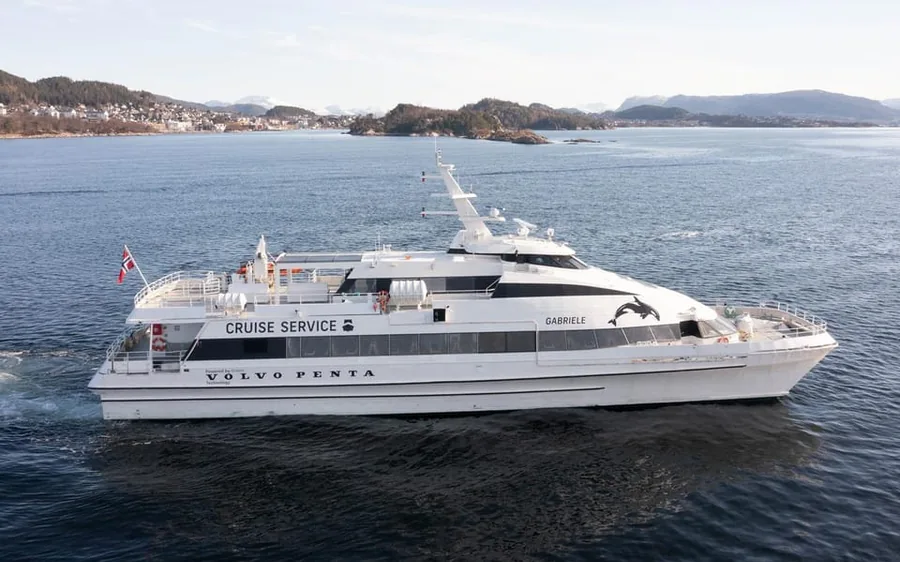
1,953 reviews6 h
6 hTromsø Whale Safari with MS Gabriele
★ 4.3 · 1,953 reviews
- Six hours, six hours aboard MS Gabriele
- Heated saloon
- Guide on deck
- Free cancellation
$212$35.33 / hour
Check availability→ Whales and aurora
Whales and northern lights in Tromso fit into one day because they happen at different hours. The whale boats sail through the short daylight window; the aurora comes out after dark, when the boats are back alongside. Between November and January the two seasons overlap completely, whale trips run from $211, and our top pick is the full day north at $361.
Quick answer
Book the whales for the day and keep the evening free for the aurora. The whale season peaks between November and mid-January; the aurora season runs from September to March, so every whale trip you can book sits inside an aurora month. The boats leave in the morning and return in the afternoon or early evening; the aurora is usually hunted between about 6 pm and midnight, by bus, by minibus or from a boat. A six to nine hour whale watching Tromso trip leaves that evening intact. A twelve-hour day north to Skjervøy is tighter, and the two-day trip from Finnish Lapland at $1,450 builds both into one booking.
Why they fit together
Whales by day, aurora after dark, same twenty-four hours.
The whales work in the light. Herring winter in the deep fjords north of Tromsø, and the orcas and humpbacks that follow them feed through the few hours when crews can see a blow or a flock of gulls marking the surface. That is why boats leave between about eight and nine in the morning even in the polar night: they are using every minute of a twilight that lasts from roughly ten to two.
The aurora needs the dark. The oval sits over Northern Norway all winter and the display strengthens as the sky deepens, which in practice means the hours after the boats have docked. Aurora guides drive inland or along the coast to find clear sky, sometimes crossing into Finland if the forecast calls for it, and are typically out between six in the evening and midnight.
So the day assembles itself. Whales from morning to mid-afternoon, a warm hour at the hotel, aurora from the evening. In the polar night the whole thing happens under a sky that stays deep blue all day, which is exactly what people come for.
Book direct
The shortest big boat, the lowest fare, the most reviewed boat on the site, and the two-day trip that includes an aurora hunt.
★ 4.3 · 1,953 reviews
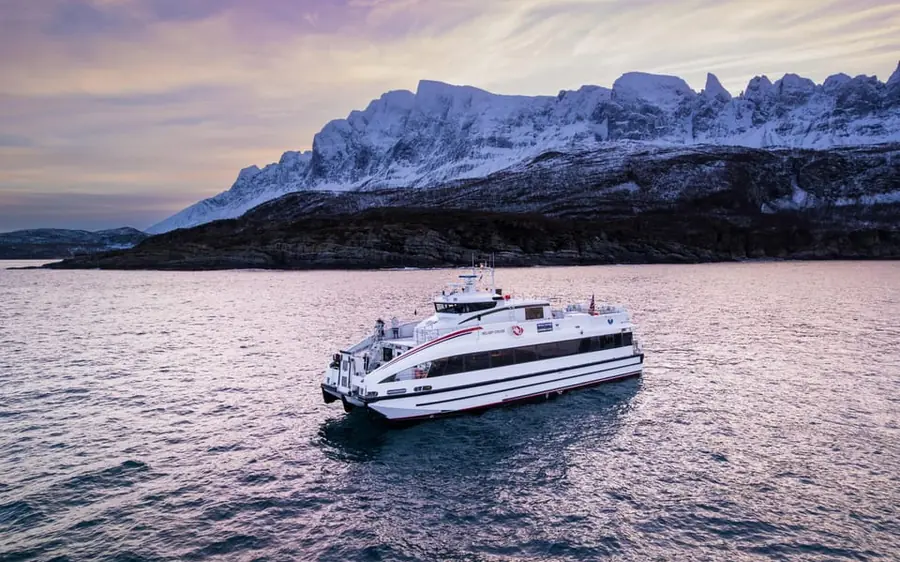
★ 4.7 · 662 reviews
★ 4.5 · 6,653 reviews
How to stack them
The gap between the boat and the bus is the part to protect.
Morning. A whale watching Tromso day checks in at the quay between eight and nine. Whichever boat you booked, you are on the water while the sky goes through its whole range of colour, and the crew is working the bait with the birds. Six to nine hour trips put you back ashore between two and five in the afternoon.
Late afternoon. This is the hour that makes or breaks the evening. Warm up, eat properly, change into dry clothes and charge a phone. Aurora chases involve standing still outdoors for long stretches, which is colder than a boat where you can duck into a saloon.
Evening. Aurora tours in Tromsø leave between roughly six and eight and return late. Guides follow the cloud forecast rather than a fixed route, which is why the good ones drive a long way and why chasing on your own from town is harder than it sounds.
If you booked the twelve-hour day north at $361, $340 or $391, plan the aurora for a different night. Those trips end late and the bus legs are long; the sky will still be there tomorrow.
Four ways people get this wrong
The aurora and the whales are both wild. The scheduling is the part you control.
The full day north to Skjervøy is twelve hours door to door. It is our top pick and it deserves its own day; put the aurora on the night before or the night after.
These are daytime trips, timed around the light the crews need. Evening aurora sailings and bus hunts are sold separately, and that separation is what makes both work.
Cloud decides it. Three nights in Tromsø gives a far better chance than one, and the whale trips fill the days in between.
A boat has a heated saloon; a roadside in Finnmark has a thermos. Aurora guides lend suits on most tours, and the layers underneath are still yours to bring.
The polar night
Seven weeks of blue afternoons and early dark.
Tromsø sits at 69 degrees north, far enough inside the Arctic Circle that the sun stays below the horizon for seven weeks. The phrase makes people picture blackness, and the reality is stranger and better: a long blue hour at the middle of the day, the peaks lit rose from underneath, and a horizon that glows orange for hours while the sun stays below it.
For the whales, that is the window the boats work. For the aurora, the polar night is the gift: the sky is dark enough for a display from mid-afternoon onward, so a clear evening gives you far more hours of opportunity than the same evening in March.
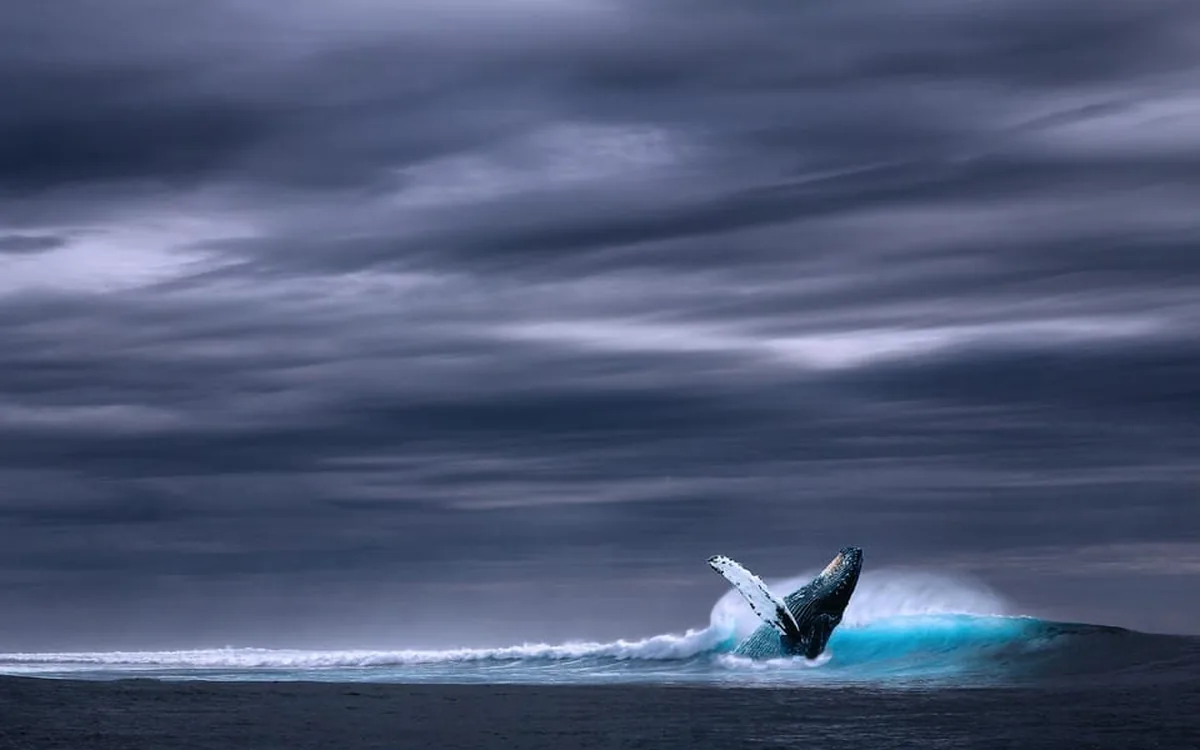
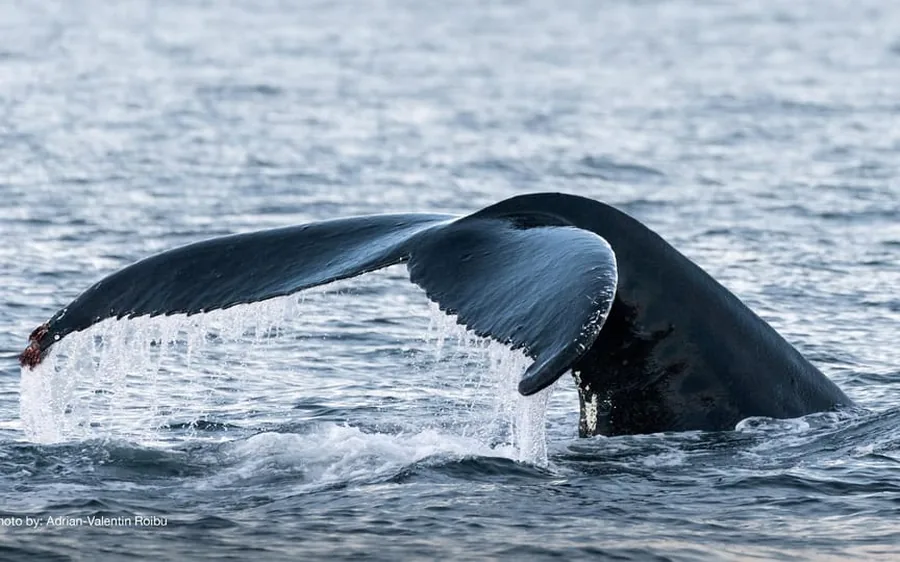
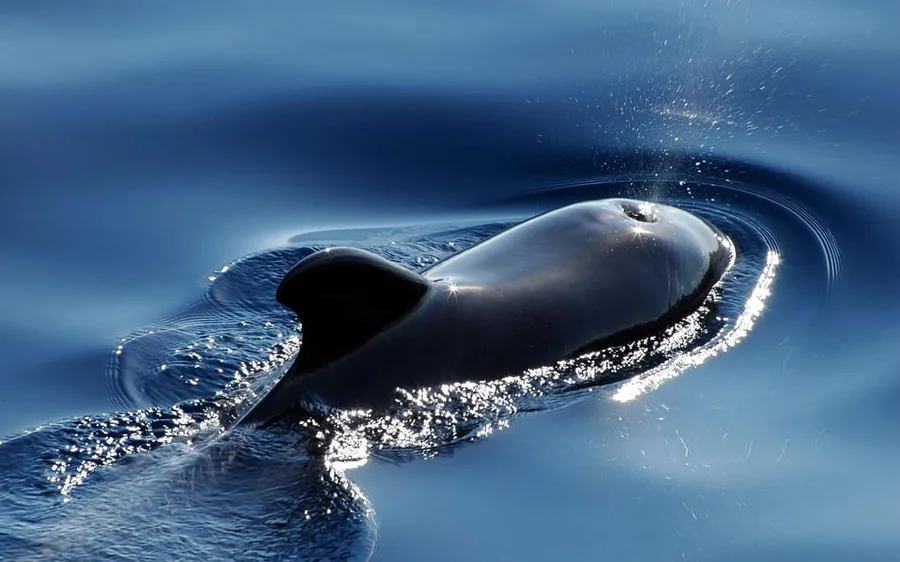
It also explains the photographs. A dorsal fin against water the colour of an old bruise, a tail going down into pink light — that is a whale watching Tromso image from the polar night, and it belongs to this latitude alone.
Reading the forecast
Clear sky beats high activity, and both are checked late in the day.
Cloud first, activity second. Visitors arrive fixated on the Kp index, the nine-point scale of geomagnetic activity, and guides here treat it as the smaller half of the question. Tromsø sits directly under the auroral oval, so even a quiet night produces something when the sky is clear. A busy night under heavy cloud produces a view of cloud. That is why aurora tours drive: they are chasing a hole in the weather, sometimes a hundred kilometres inland or across into Finland.
What to check, and when. The Norwegian Meteorological Institute publishes detailed cloud forecasts for the region, and the aurora services publish short-term activity estimates. Both are worth a look in the late afternoon of the day you plan to go out, which happens to be the hour you are back from the boat and warming up. If a guided hunt is already booked, the guides do this for you and pick the route accordingly.
What the sky does. Displays build and fade over minutes rather than hours, and the quiet stretches between them are part of the evening. A faint grey-green arc low over a ridge is often the start of something; to the eye it reads paler than the photographs, because a camera sensor gathers light for several seconds and the human eye works instantly. Both versions are worth standing outside for.
Two days from Ruka or Rovaniemi to Tromsø, with an aurora hunt and a guide included — free cancellation to 24 hours before.
See the two-day trip→Common questions
Yes, because they happen at different hours. The whale boats sail in the daylight window and the aurora is hunted after dark, once the boats are back alongside.
A whale watching Tromso trip is a daytime one, timed around the light the crews use to find the animals. Aurora sailings and bus hunts are sold separately in the evening.
November to mid-January, which is also the peak of the whale season. The aurora season itself runs from September to March.
Three if you can. Cloud decides whether a given night works, and the whale trips fill the days while you wait for a clear sky.
$212 at six hours, or $211 at seven and a half. Both leave from the middle of Tromsø.
$1,450 runs two days from Ruka, Kuusamo or Rovaniemi to Tromsø with an aurora hunt and a guide built into the fare.
The sun stays below the horizon from 27 November to 15 January, and the middle of the day is a long blue-and-rose twilight rather than darkness.
Go deeper
When the whales arrive, when they leave, and which month suits which boat.
VerdictFourteen ranked for one decision, with a straight answer for each kind of visitor.
PricesFourteen fares compared, cost per hour, and what the price includes.
OrcasWhat you actually see, how close the boats get, and why the two species travel together.
SkjervøyTwo hours north of Tromsø, and why half the fleet drives there in midwinter.
RIB or catamaranSpeed, warmth, cameras and seasickness: how the two kinds of boat differ.
From Tromso: Whale Watching in Magic Skjervoy
★ 4.7 · 1,211 reviews · Free cancellation 24 h